
Holidaypac develops custom sushi push pop tube lids using our own lid mold. For a restaurant, takeaway brand or packaging distributor, the important question is how the lid, paper tube, pushing disc and sauce accessory work together. This article shows the physical samples and packing details behind our development, plus the specifications buyers should confirm before placing a custom order.
What does our own sushi tube lid mold mean for buyers?
The lid mold is tooling used to form the lid component. Holidaypac owns the mold for the sushi tube lid discussed here. This gives buyers a specific component to discuss during product development, rather than treating the lid as an unspecified accessory. A printed paper tube and a molded lid are different parts: both need to be approved as part of the complete packaging set.
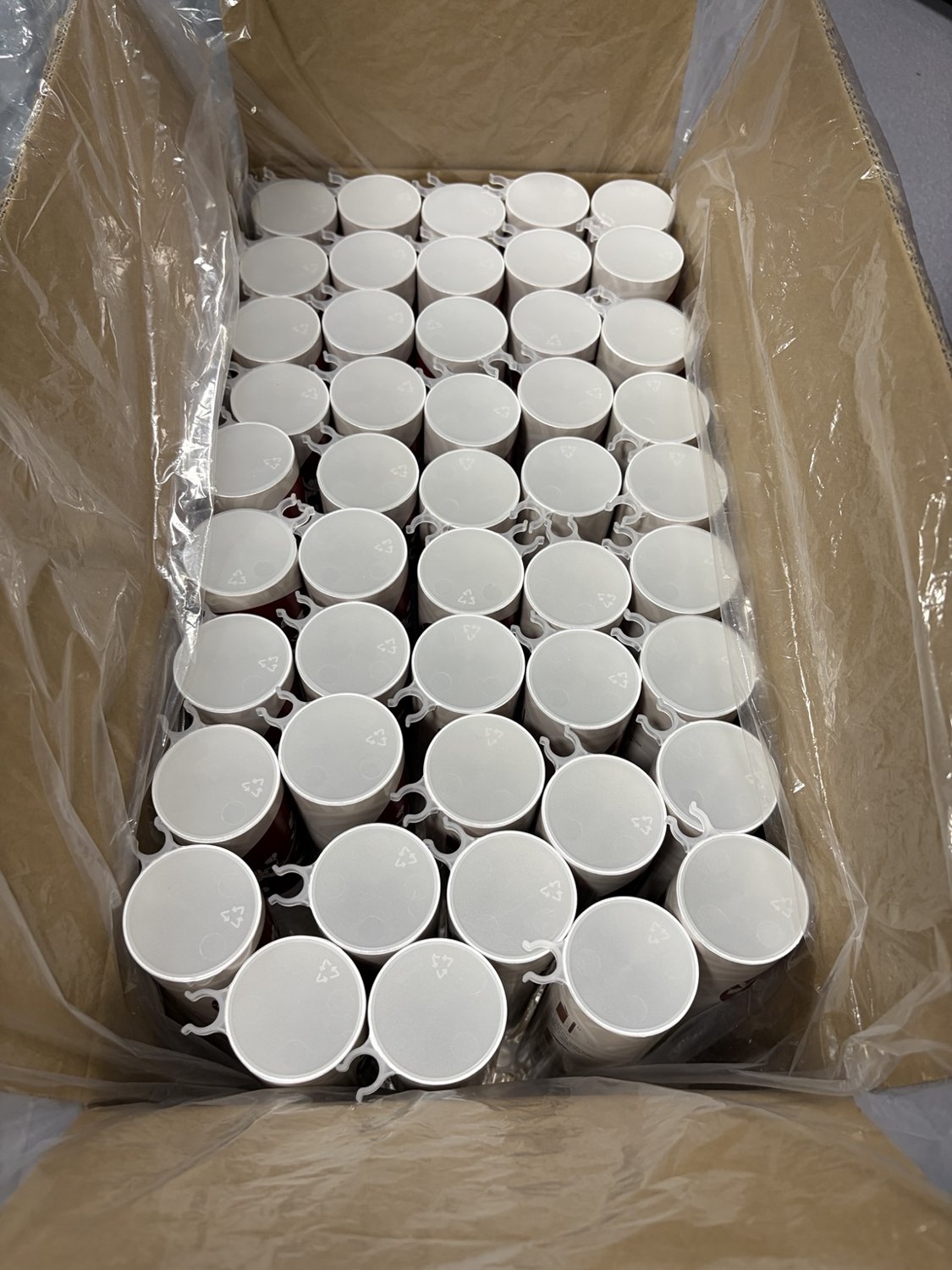
Photo: molded components in a lined shipping carton. The white circular lids shown have a side holder feature. When requesting a sample, identify the lid style, color and holder arrangement you need so the proposed set can be checked together.
For a sourcing decision, assess the actual sample, intended food contact, storage conditions and destination-market documentation. If your project calls for new lid geometry or another tooling change, we can review the proposed dimensions and development requirements.
Develop the lid, pushing disc and sauce holder as one set
Photo: assembled sample with an external sauce tube. This example shows the paper body, black base component, retaining clip and long sauce tube together. Check where fingers grip the body, how the sauce tube is removed and whether the holder covers important printed information.
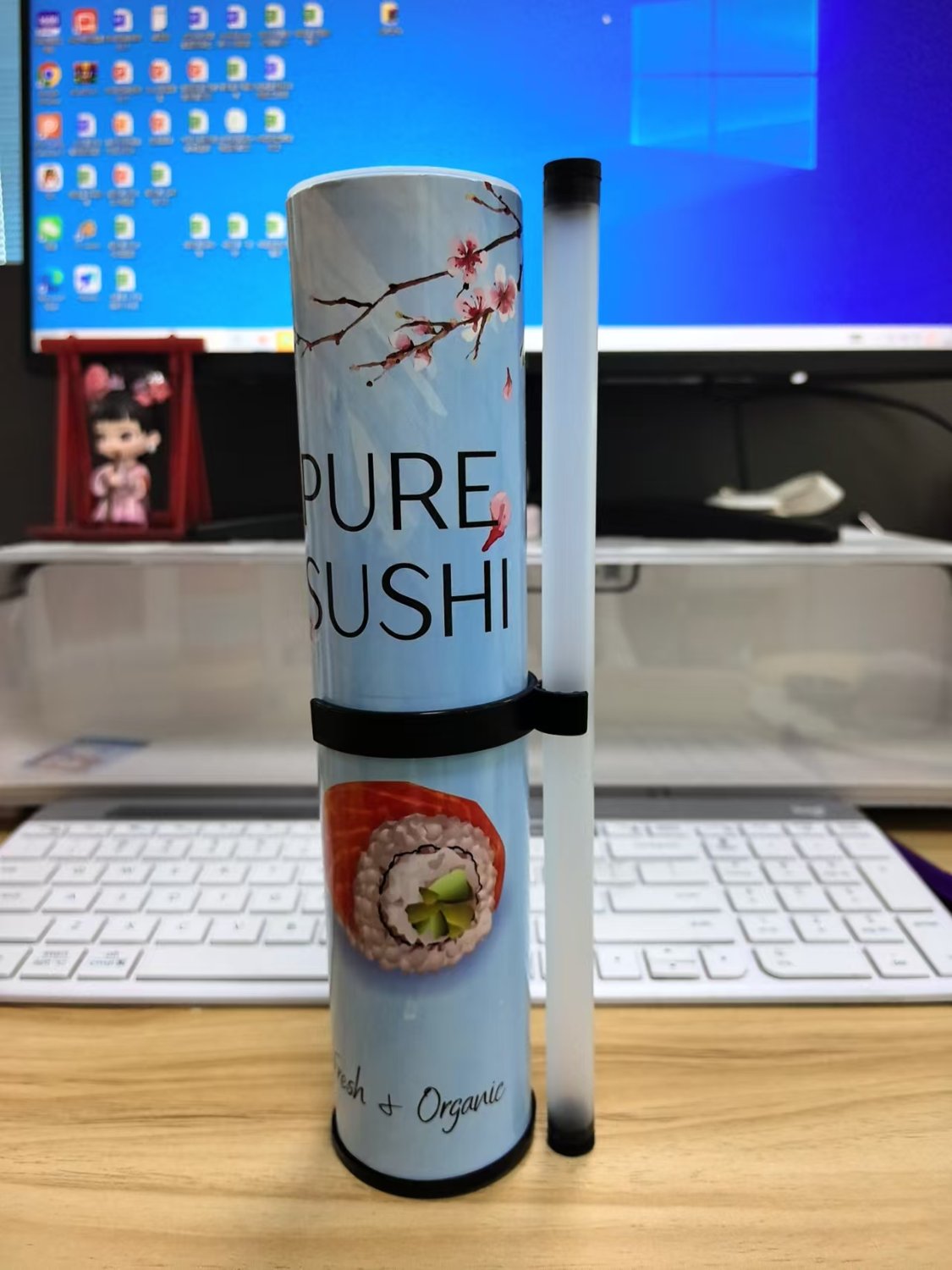
A useful sample review follows the customer journey: receive the filled pack, open it, remove the sauce accessory and push the sushi upward. Try this with your actual roll diameter and filling method. Note any tight fit, loose component or awkward handling before approving bulk production. Record the results in your sample approval notes so both teams work from the same requirements.
Confirmed reference specifications for the 220 mm model
The following figures describe the confirmed 220 mm reference model. They should not be applied automatically to mini tubes, artwork drawings or a different lid version. Ask us to confirm which component set is included in your quotation.
| Component | Reference specification |
|---|---|
| Paper tube body | 53 mm outer diameter; 51 mm inner diameter; 220 mm height |
| Paperboard construction | 234 gsm + 450 gsm white paperboard; 110 gsm food-grade coated inner lining |
| Lid and bottom | 53 mm nominal diameter |
| Internal pushing disc | 50 mm diameter |
| Sauce tube | 15 mL; 10 mm inner diameter; 12 mm outer diameter; 225 mm length |
| Reference carton | 100 pieces; 58 × 48 × 35 cm; 6.5 kg gross weight |
A nominal lid diameter alone does not define its fit. Confirm the mating surfaces, assembled sample and any tolerances needed for your project. For the broader product range, see our sushi push pop packaging and custom tube options.
Keep branding clear around the lid and side accessory
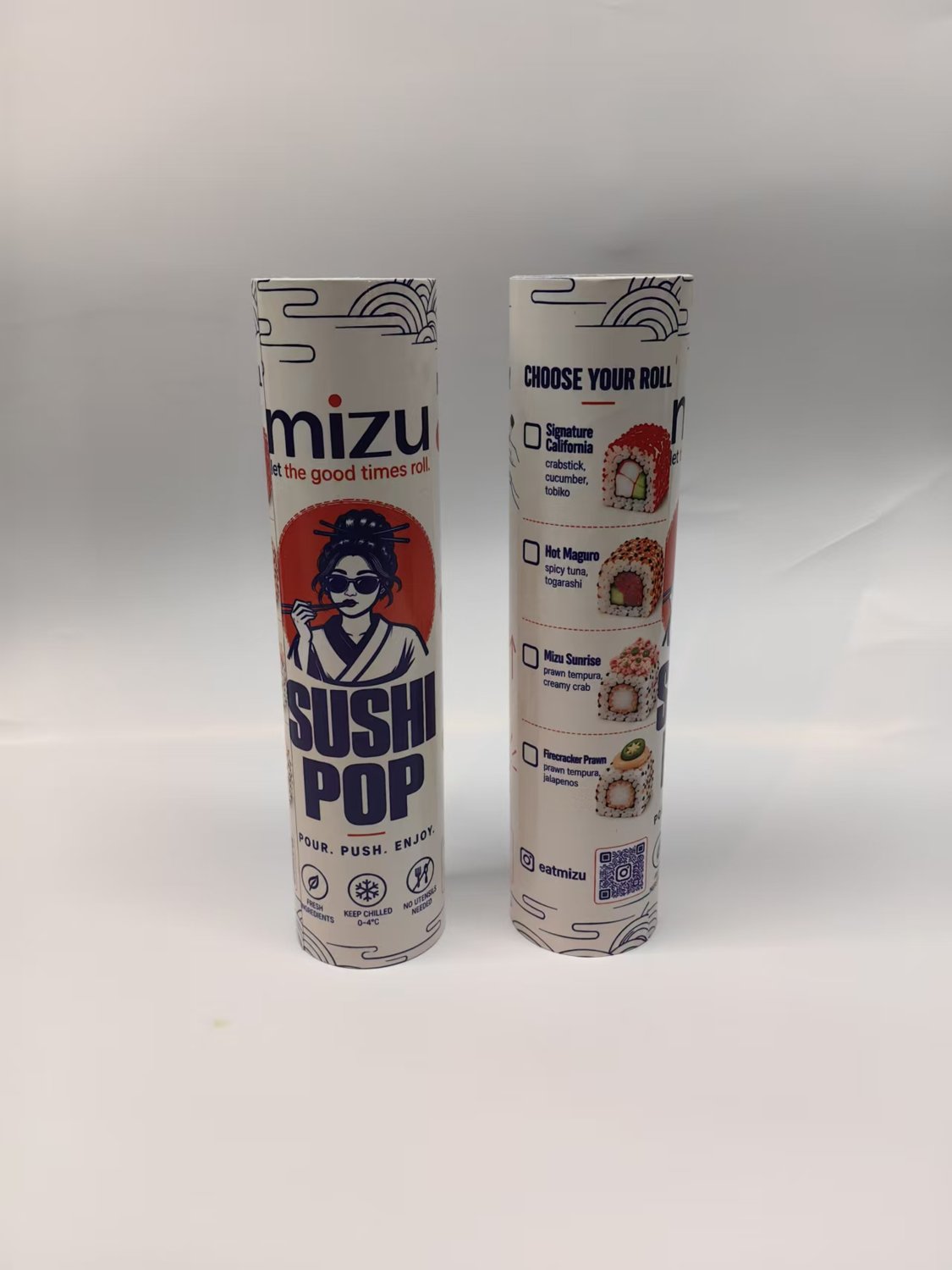
Photo: front and back views of printed tube samples. A cylindrical pack can carry a brand panel, roll choices, serving instructions and a QR code. Plan the artwork around the seam and the position of the side accessory. Brand artwork shown in these samples illustrates possible print layouts.
Approve artwork on the correct dieline for your selected model. Check small text and scan the QR code on the curved physical sample, with the lid and accessory fitted. A flat artwork preview cannot show every clearance issue. Our custom printed sushi tube design guide covers artwork preparation in more detail.
Confirm how components will arrive at your packing station
Photo: sauce tubes and black accessories packed separately. Discuss which parts arrive assembled and which your team will fit. Confirm quantities for each component, protective bags and carton markings. A photograph shows the packing arrangement; it does not replace an agreed packing list or shipment specification.
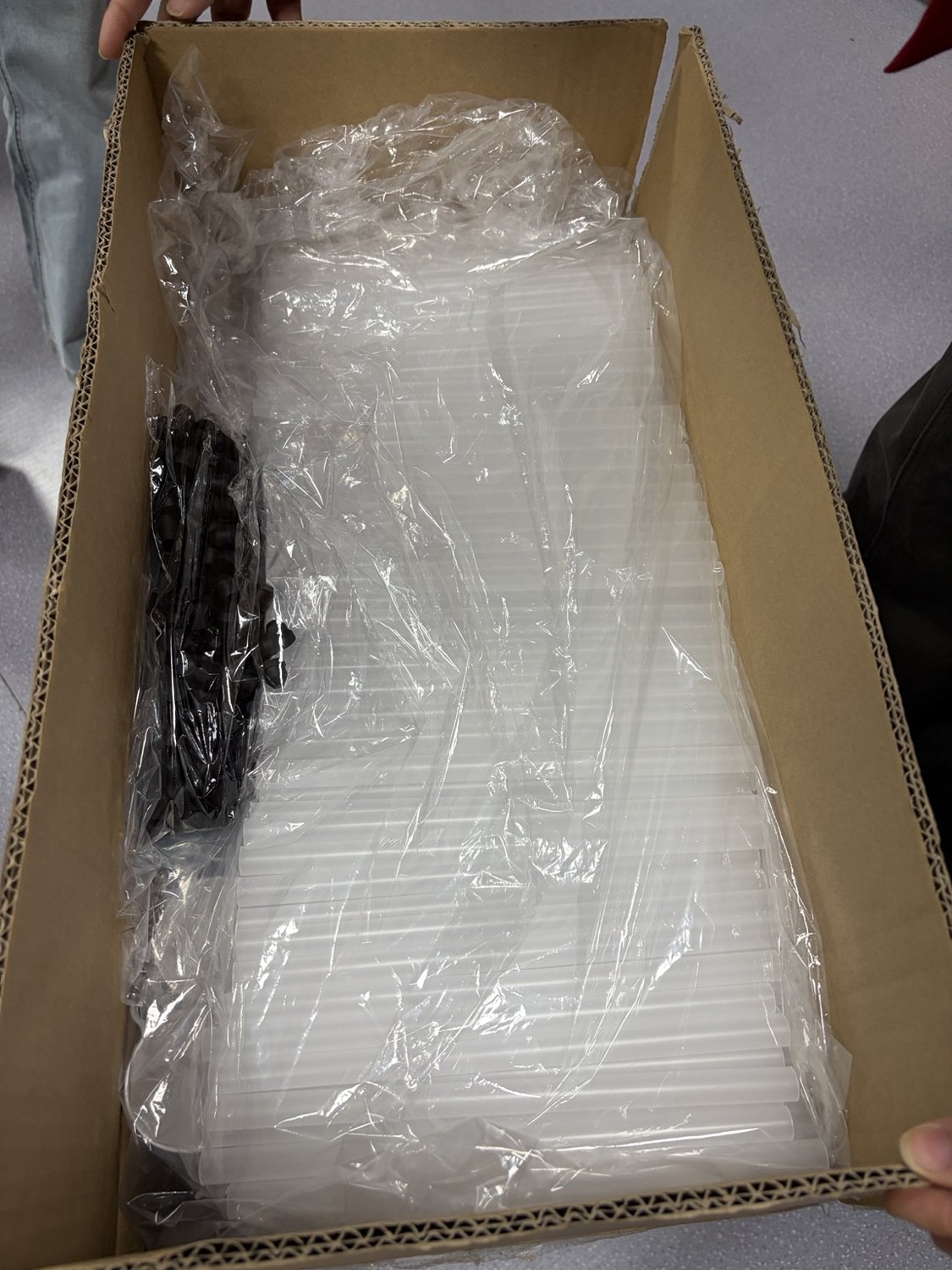
Before ordering, ask for a component checklist covering the body, lid, bottom or pushing parts, sauce tube and holder. Confirm the packing method for your selected configuration. The reference carton figures above apply to the confirmed model and may change if the assembly or accessories change.
Questions buyers ask about custom sushi tube lids
Can I order a printed tube using your existing lid mold?
Ask us to match your selected tube and artwork to the available lid configuration. Approve a complete sample before confirming the production specification.
Can the lid shape or holder be changed?
Send a drawing or explain the required change. We need to review dimensions, fit and tooling requirements before confirming feasibility, cost or timing.
How quickly can I review a sample?
Samples generally take 3–5 days after specifications are confirmed, with shipping time additional. A new tooling requirement or other development work needs its own schedule.
Request a complete sushi push pop packaging sample
To discuss a project, send your sushi roll diameter and length, target market, estimated order quantity, preferred lid and sauce arrangement, artwork and required delivery date. Ask for a quotation that identifies the complete component set, minimum order quantity and sample approval steps.
Review the product options and request a custom packaging quote. A complete sample gives your team a practical basis for evaluating the lid, printed body and accessories together.