
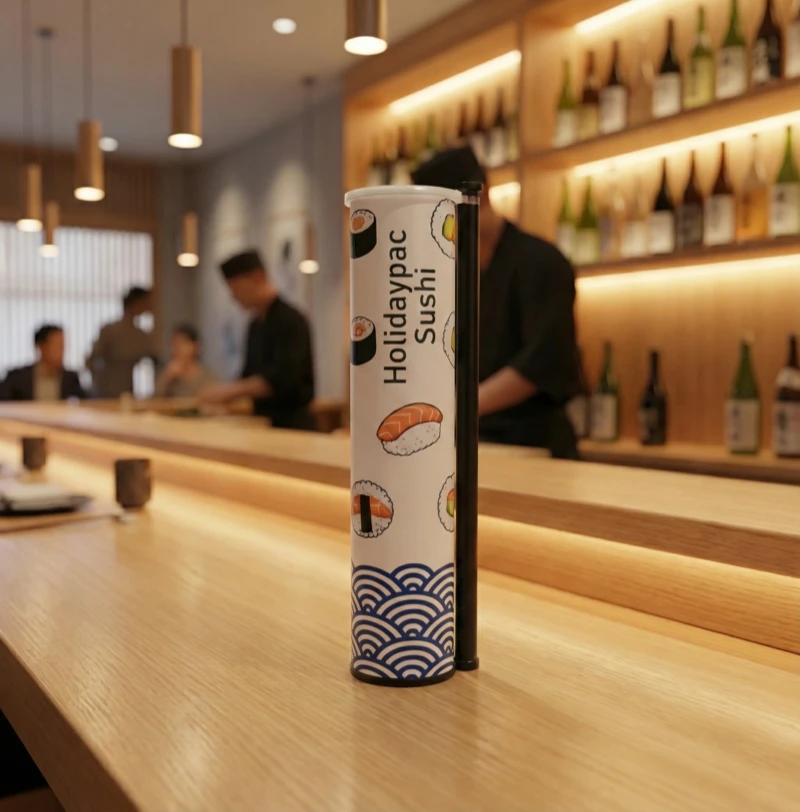
Is your sushi game feeling a bit… flat? Let’s talk about why a paper tube might be the literal engine driving your next sales spike.
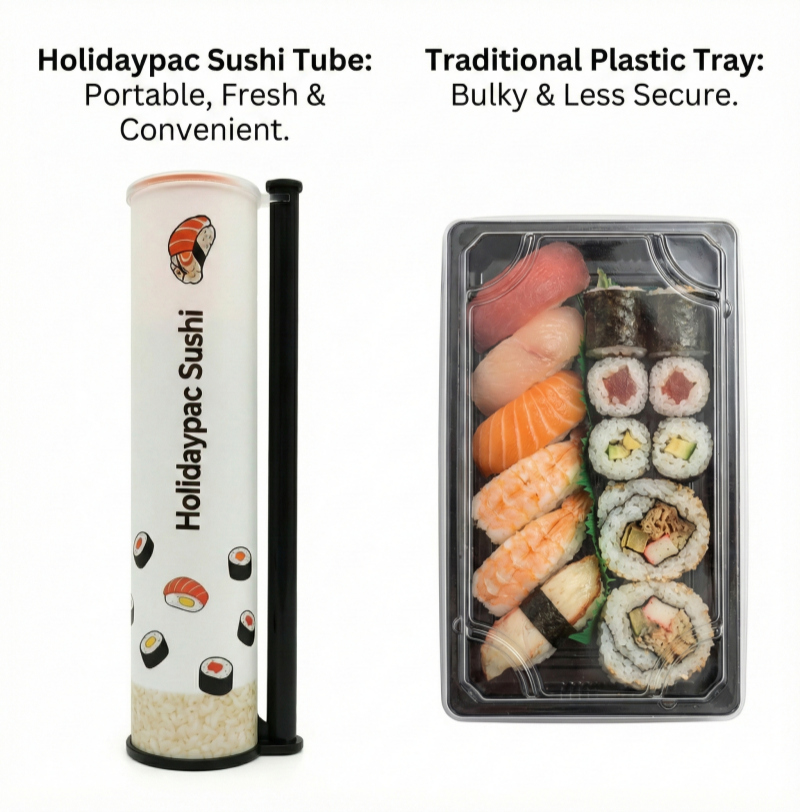
Why is traditional sushi packaging kind of a mess?
The honest truth is that standard sushi takeout containers are clunky, prone to sliding, and generate a mountain of waste. You know the drill: the flimsy plastic lid that pops off in the delivery bag, the tiny plastic grass that serves zero purpose, and those annoying little soy sauce fish that are impossible to open without squirting salt water on your shirt.
Beyond the mess, traditional packaging demands a “sit-down” environment. You need a table, a pair of chopsticks, a dipping bowl, and a stack of napkins. In a world where people want to eat while walking through a park or commuting, traditional sushi is high-maintenance. It’s a bottleneck for sales because it limits where and how your customers can enjoy your food.
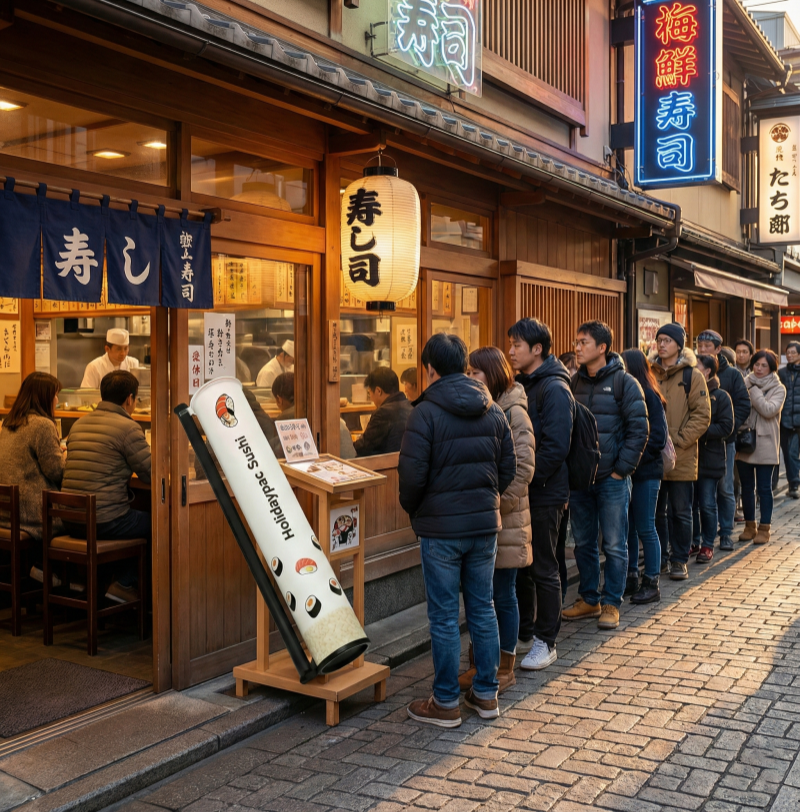
How did Suka Sushi in NYC turn a tube into a goldmine?
Suka Sushi didn’t just change the menu; they changed the geometry of the meal, and New York went wild for it. By packing premium ingredients into a push-up tube, they turned a sit-down Japanese staple into a portable, “walk-and-eat” experience.
The result? Massive lines and a sales surge that most restaurants only dream of. It wasn’t just about the fish; it was about the frictionless experience. When you remove the need for a table and chairs, your “dining room” becomes the entire city. Suka Sushi proved that if you make sushi as easy to eat as a Snickers bar, people will buy it twice as often.
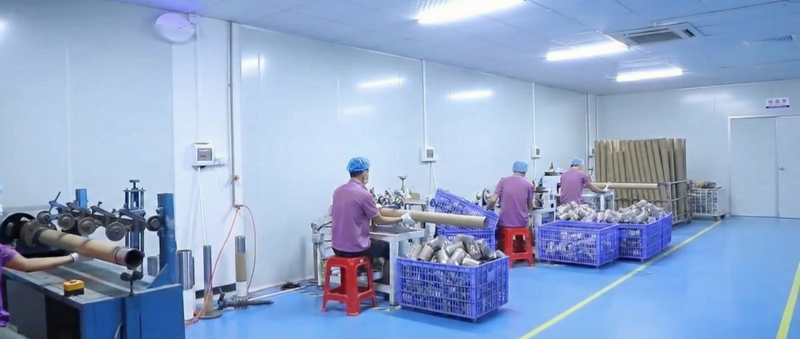
Why should you actually care about Sushi Push Pop packaging?
It’s the ultimate “triple threat” of branding: eco-friendly, utensil-free, and genetically engineered for the TikTok era. Here’s why this isn’t just a gimmick, but a serious business move:
- Goodbye, Accessory Overload: Think about your current overhead. Chopsticks, soy sauce cups, ginger packets, and napkins add up. With a Push Pop, the experience is self-contained. You don’t need the extra plastic “junk,” which saves you money and saves the planet.
- The Paper Tube Revolution: If you opt for high-quality paper/cardboard tubes, you’re hitting the “eco-friendly” button that today’s Gen Z and Millennial diners crave. It feels premium, not “disposable.”
- Built-in Marketing Agency: Let’s be real—traditional sushi rolls look the same in photos. But a Push Pop? It’s colorful, it’s tiered, and the “pushing” action is satisfying to watch. Customers will film themselves eating it and post it to Instagram and TikTok before they’ve even finished the first bite. That’s free advertising you can’t buy.
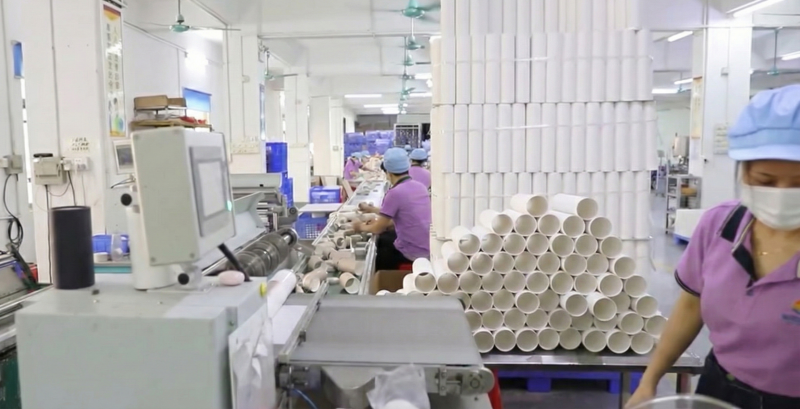
What do restaurant owners need to watch out for when sourcing?
Simple? Not really. It’s actually quite complex when you look closer at the hardware. If you’re ready to pull the trigger on a bulk order, don’t just click “buy” on the cheapest option. Here is what actually matters for your bottom line:
Is the material actually safe?
You’re dealing with vinegar-heavy rice and raw fish. You need food-grade, BPA-free materials (or high-quality treated paper). If the material reacts with the acidity of the rice, it’ll ruin the flavor—and potentially your reputation.
Does the mechanism actually… work?
There’s nothing worse than a “sticky” push pop. If the piston is too tight, the customer has to fight the tube; if it’s too loose, the sushi collapses. You need a smooth mechanical glide and a perfect seal at the bottom so those expensive sauces don’t leak onto your customer’s hands.
Will it slow down your kitchen?
Time is money. You need tubes that are easy to fill. Look for suppliers who offer filling guards or specialized racks. If it takes your chefs three times longer to “tube” a roll than to roll it on a mat, your labor costs will eat your margins.
What’s the “hidden” cost of storage?
Here’s the thing: tubes don’t stack. Unlike flat-packed cardboard boxes, these take up real estate in your dry storage. Before you order 5,000 units, make sure you actually have the shelf space for the boxes, and calculate if the shipping volume makes sense for your budget.
Key Points:
- Sales Growth: Higher turnover thanks to “on-the-go” consumption.
- Cost Savings: No need for chopsticks, sauce containers, or bulky bags.
- Viral Potential: Aesthetic layers drive organic social media shares.
- Eco-Friendly: High-quality paper options reduce plastic waste.
- Operational Check: Focus on material safety, mechanical “glide,” and storage space before buying.
So, are you going to keep wrestling with plastic lids and soy sauce leaks, or is it time to give your customers something they can actually hold onto?
Would you like me to help you draft a social media announcement for your new Push Pop menu items?